
 EN
EN
 AR
AR
 NL
NL
 FR
FR
 DE
DE
 IT
IT
 NO
NO
 PL
PL
 PT
PT
 RU
RU
 ES
ES
 SV
SV
 IW
IW
 GA
GA
 MI
MI
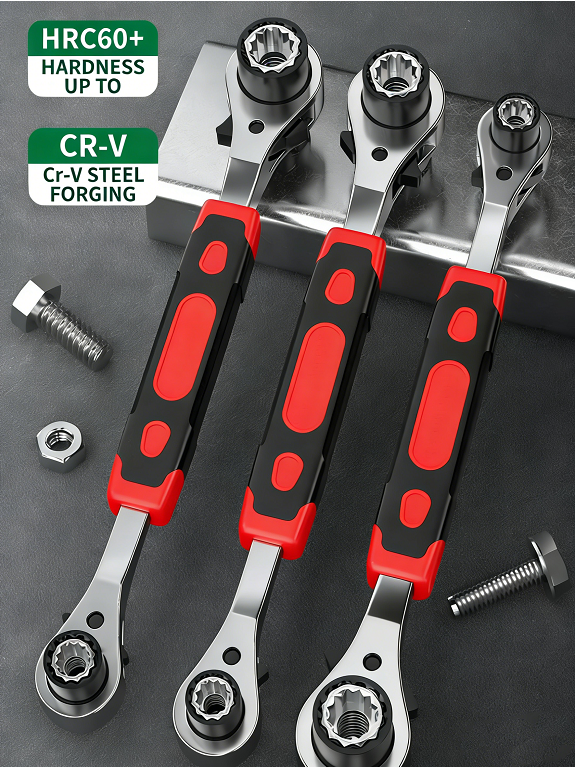
The Engineering Advantage: How Ratchet Wrench Design Enables Precision in Tight Spaces
Swing Angle Efficiency: Why 5°–10° Arcs Matter in Confined Engine Bay Work
Engine compartments today have fastener clearances typically around 1.8 cm between parts, which makes regular wrenches practically useless since they need about 30 degrees of swing space. That's where ratchet wrenches come into play, designed with special mechanisms that work even when there's barely 3 to 5 degrees of movement available according to the ASME B107.20-2022 guidelines for hand tools. These tiny rotation capabilities mean mechanics don't have to keep moving their hands around so much, allowing them to tighten bolts continuously in tight spots like cylinder heads or deep inside transmission areas. Mechanics at ASE certified workshops report seeing about 40% fewer slippage problems and cutting down on those annoying repetitive motions by roughly two thirds. Makes all the difference when replacing something tricky like an alternator where visibility is poor and getting consistent torque matters a lot for proper installation.
Gear Tooth Count & Mechanical Fidelity: From 72-Tooth Precision to Consistent Torque Transfer
When it comes to delivering accurate torque, high density gear systems play a key role. Take ratchets with those 72 to 120 tooth mechanisms they can actually reach angular increments down to about 3 degrees. That means getting around 40 to 50 percent more engagement points during each full rotation compared to standard 45 tooth models. The result? More consistent force transfer through every stage of the torque process from when parts first seat against each other, through the middle range where most work happens, right up until reaching the specified tightness level. With these gears making contact so frequently, there's less chance of sudden torque surges that might warp delicate components like aluminum engine blocks or lightweight suspension parts. Some tools use dual pawl designs which basically overlap their engagement areas to get rid of any dead spots. These advanced systems keep torque variation under control, staying within plus or minus 2 percent after multiple uses according to tests set out in SAE J2220 standards for calibrating torque tools. Getting this kind of repeatable performance matters a lot because it helps avoid gasket failures in environments where temperatures and pressures run really high.
Real-World Precision: Ratchet Wrench Performance in Critical Automotive Applications
Tire and Suspension Repairs: Mechanic Testimonials on Repeatable, Fatigue-Resistant Tightening
When working on tires and suspension components, uneven torque application can lead to serious problems like wheels coming loose, misalignment issues, and parts wearing out way too soon. That's where quality ratchet wrenches really shine. Mechanics talk about how these tools let them tighten lug nuts accurately even in cramped wheel well spaces without constantly moving their hands around. This helps maintain consistent pressure throughout rotation work and when servicing brakes. The handles are designed for comfort with those grippy textures that make all the difference when someone needs to work one-handed for hours replacing struts or similar jobs. Nobody wants sore hands after a day at the shop, especially when dealing with greasy or oily surfaces. According to research done across multiple repair shops by the Auto Care Association last year, getting fasteners right stops about 92% of early wear problems related to suspensions. And high tooth count ratchets keep their accuracy over thousands of uses, which means fewer warranty headaches caused by parts coming loose from vibrations down the road.
Precision Beyond Mechanics: Ergonomics, Control, and Risk Mitigation with Professional Ratchet Wrenches
Ergonomic Design and Direction-Switch Discipline Prevent Stripped Fasteners and Misalignment
The best quality ratchet wrenches come with specially shaped grips that won't slip out of even greasy hands, so there's less chance of damaging those precious bolt heads. These tools also have easy to use direction switches that let mechanics switch from tightening to loosening without having to take the wrench off the bolt at all. Pretty handy stuff when working in tight spots where every second counts. The combination of good grip and responsive action makes a real difference in preventing those annoying alignment problems and cross threading issues. According to recent industry data, around 38 percent of all fastener failures happen because of these exact problems in car repair shops. Mechanics who work with properly designed ratchets notice something interesting too: they strip bolts about 30 to 40 percent less often than before. That means less time spent fixing mistakes, fewer damaged parts needing replacement, and overall better results on the first try.
Ratchet Wrench vs. Standard Wrench: A Cost-of-Failure Analysis for Automotive Professionals
When automotive pros pick between ratchet and standard wrenches, they're really making choices that affect both money and workflow. Standard wrenches need about a 30 degree swing each time compared to only 5 degrees for ratchets. That means mechanics have to keep moving their hands around in tight spots inside engines these days. The problem gets worse because this constant repositioning leads to mistakes. Mechanics actually see around 70% more stripped bolts on suspension jobs when using regular wrenches. Why? Because the wrench slips off and loses alignment every time it's moved. Getting those stuck bolts out takes extra time - somewhere between 15 to 30 minutes per incident according to Auto Service Professional from last year. Shops lose anywhere from $37 to $74 each time this happens. Sure, ratchet wrenches cost $15 to $50 more upfront than standard ones, but they deliver something valuable: consistent torque application under 200 foot pounds without all the guesswork caused by cramped spaces. Most repair shops find that these wrenches start paying for themselves pretty quickly thanks to saved labor hours and fewer parts needing replacement. For busy garages dealing with lots of vehicles or critical repairs where failure isn't an option, ratchet wrenches aren't just better tools. They've become essential equipment for anyone serious about quality work.
| Failure Factor | Ratchet Wrench Impact | Standard Wrench Impact | Cost Implication |
|---|---|---|---|
| Swing Arc Repositioning | Minimal (5°) | Frequent (30°) | +15–30 min labor per incident |
| Stripped Fastener Rate | 12% lower | 70% higher in confined spaces | $37–$74 per repair |
| Torque Consistency | Reliable <200 ft-lbs | Variable in tight quarters | Premature part failure risks |
FAQs About Ratchet Wrenches
What is a ratchet wrench?
A ratchet wrench is a tool used for tightening or loosening nuts and bolts. It allows for small movements in confined spaces by using a gear and pawl mechanism, enabling precision work without full rotations.
Why are ratchet wrenches preferred over standard wrenches?
Ratchet wrenches require less clearance with only a 5-degree swing ability compared to a standard wrench's 30-degree need, making them ideal for tight spots in automotive work.
How do ratchet wrenches help prevent stripped fasteners?
They provide consistent torque application and offer better control over grip and direction, reducing the chances of stripping fasteners during use.
What are the cost advantages of using ratchet wrenches?
Though ratchets may cost slightly more upfront, they save on labor costs and reduce the chances of fastener damage, leading to long-term savings and efficiency.
Table of Contents
- The Engineering Advantage: How Ratchet Wrench Design Enables Precision in Tight Spaces
- Real-World Precision: Ratchet Wrench Performance in Critical Automotive Applications
- Precision Beyond Mechanics: Ergonomics, Control, and Risk Mitigation with Professional Ratchet Wrenches
- Ratchet Wrench vs. Standard Wrench: A Cost-of-Failure Analysis for Automotive Professionals
- FAQs About Ratchet Wrenches