
 EN
 AR
 NL
 FR
 DE
 IT
 NO
 PL
 PT
 RU
 ES
 SV
 IW
 GA
 MI
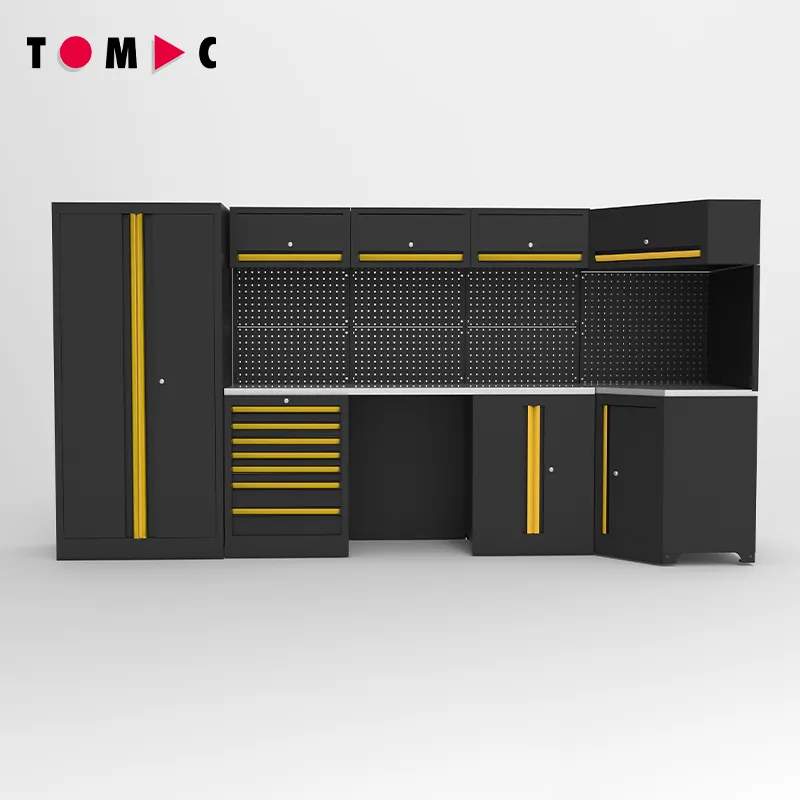
Tool storage looks like a facilities decision and behaves like a productivity one, because every minute an operator spends hunting for a tool is a minute the job is not moving. The gap between a bay that runs and one that stalls is often the distance between where a tool lives and where it is used. Buyers who treat tool storage as part of the process rather than as furniture recover the time they are currently losing. The guidance below covers real bays, the failure modes of poor organization, the engineering that holds, and a buyer checklist for tool organization and workshop storage.
Real-World Industry Case / Scenario
A Shop That Recovered an Hour a Day
A machine shop timed its operators and found a surprising share of the shift spent searching for wrenches and inserts. Reorganising the tool storage around the job sequence rather than the tool type recovered most of it. The buyer learned that tool storage is a layout decision, and that tool organization built around the workflow beats a tidier version of the same chaos.
Specified against the real duty, tool storage pays back through fewer failures and longer service.
The case for tool storage is strongest where demand is continuous and the specification is fixed.
A clean, dry store keeps tool storage serviceable and shortens the return-to-service time.
A Maintenance Team That Stopped Losing Tools
A maintenance team kept a shared tool cabinet with no accountability and replaced the same wrenches three times in a year. Introducing shadow-board tool storage with a named owner per station ended the loss. The buyer learned that workshop storage only works when every tool has a home and a person responsible for returning it.
Buyers who log each unit of tool storage after every shift catch small faults before they become safety issues.
A workshop tool programme begins with the task, because a tool bought for a job it cannot do is storage, not capability.
A named owner for each station keeps accountability clear when a tool goes missing.
Risk & Failure Mode Analysis
Search Time and Hidden Shortages
The dominant cost of poor tool storage is search time, which never appears on a report and consumes the shift quietly. A shared cabinet with no defined location also hides shortages, because nobody knows whether a tool is missing or simply elsewhere. The fix is defined locations with a visible home for every item, because tool organization removes both the search and the ambiguity.
Measure the search time before and after. A bay that has not measured cannot tell whether the tool storage change paid back, so the baseline should be timed first. Buyers who record the search time before the reorganisation prove the saving rather than assume it.
Choosing tool storage starts with the duty, the environment, and the volume involved.
Regular inspection catches wear before it produces a fault or an injury.
Damage, Safety, and Downtime
A second risk is damage and injury, since tools stored loose on a bench or in a drawer get dropped, and a cluttered bay is a trip and a laceration risk. Poor workshop storage also slows the changeover, because the operator cannot find the right tool before the machine waits. The buyer should treat tool storage as a safety decision as well as a productivity one, because a bay that cannot find its tools cannot run at rate.
Standardise the location, not just the cabinet. Two bays that each invent their own layout cannot share tools or cover for each other, so the location scheme should be common. Tool organization standardised across a site lets any operator work at any station.
Tool training matters as much as the purchase, since an untrained user damages both the tool and the work.
A written maintenance schedule keeps the same standard across shifts and crews.
Technical Principles & Standard Compliance
Layout, Labelling, and Access Control
Effective tool storage follows the workflow, because the tool should live where the hand expects it rather than where the catalogue groups it. Shadow boards, labelled drawers, and defined locations make the absence of a tool visible, which is what turns tool organization into a control rather than a tidying exercise. A tool cabinet should be rated for the load it carries, since a drawer loaded beyond its rating fails and dumps the contents. Access control matters where tools are shared or where consumables walk, because a locked or monitored cabinet closes the loss path. The layout should also respect the aisle and the safe access route, because workshop storage that blocks a fire exit or a service route creates a hazard the saving does not cover. Buyers should specify the tool storage against the job sequence, the tool weight, and the access rule together, because a system strong on one and weak on the others fails in daily use.
Review the layout when the process changes. A tool storage layout designed for the old job sequence actively slows the new one. Buyers who revisit the layout after a process change recover the time the change took away.
A documented inventory prevents the loss that turns a well-equipped bay into a borrowing chain.
Actionable Buyer & Maintenance Guide
Designing the Storage Around the Work
Buyers should map the job sequence first, then place the tool storage so the most-used items sit closest to the work and every item has a labelled home. Suppliers of tool storage such as TOMAC provide a workshop storage plan that names locations, load ratings, and access. A shadow board at each station makes a missing tool obvious within seconds. Tool organization built this way removes the search, protects the tools, and keeps the bay running at rate.
Include consumables in the scheme. A bay with perfect tool organization and a bin of loose fasteners still loses time to the fasteners. Workshop storage that covers consumables with a defined replenishment point closes the last of the search time.
Spare consumables on hand turn a worn part into a short stop rather than a lost shift.
Frequently Asked Questions
Question 1: Does tool storage really affect productivity?
Answer: Yes, because search time is real time and it compounds across every job and every operator. A bay with defined tool storage finds the tool in seconds while a disorganized one loses minutes per changeover. Buyers who measure the search time usually find it larger than expected, which is why tool organization pays back quickly.
Question 2: What makes a tool cabinet effective?
Answer: An effective tool cabinet has a defined, labelled location for every item and a load rating that matches what it carries. Drawer dividers and shadow boards make absence visible, which is what turns workshop storage into a control. A cabinet that is merely large holds more clutter and hides the same shortage.
Question 3: How is tool loss prevented?
Answer: Loss is prevented by giving every tool a visible home and a named owner, so a missing item is noticed the same shift. Tool storage with a shadow board shows the gap immediately. Buyers who add an access rule for shared items close the remaining path, because tool organization without accountability still loses tools.
Question 4: Should storage follow the tool type or the job?
Answer: Storage should follow the job sequence, because the tool belongs near the hand that uses it. Grouping by tool type looks tidy and costs search time on every changeover. Buyers who lay out the tool storage around the workflow recover the time that grouping by catalogue quietly takes away.