
 EN
EN
 AR
AR
 NL
NL
 FR
FR
 DE
DE
 IT
IT
 NO
NO
 PL
PL
 PT
PT
 RU
RU
 ES
ES
 SV
SV
 IW
IW
 GA
GA
 MI
MI
Core Hand Tools Every Heavy-Duty Technician Needs
Heavy-duty technicians rely on core truck tools for precision tasks where power tools can't reach. Investing in industrial-grade hand tools prevents costly errors and ensures OSHA-compliant repairs on critical systems like brakes and drivelines.
Wrenches, Pliers, Screwdrivers, and Hammers: Precision Manual Control
When space gets tight, combination wrenches really shine because they give so much leverage where it matters most. Locking pliers are another must-have for holding onto those weird shaped parts during complicated fixes. For anyone dealing with 12 volt or 24 volt systems, insulated screwdrivers save headaches by stopping accidental shorts. And let's not forget dead blow hammers - these bad boys knock loose stuck parts without marring surfaces. Most experienced techs swear by forged steel tools with good grip handles. They know from experience that these tools make all the difference when wrestling with hydraulic lines or suspension bits that are pulling apart under pressure.
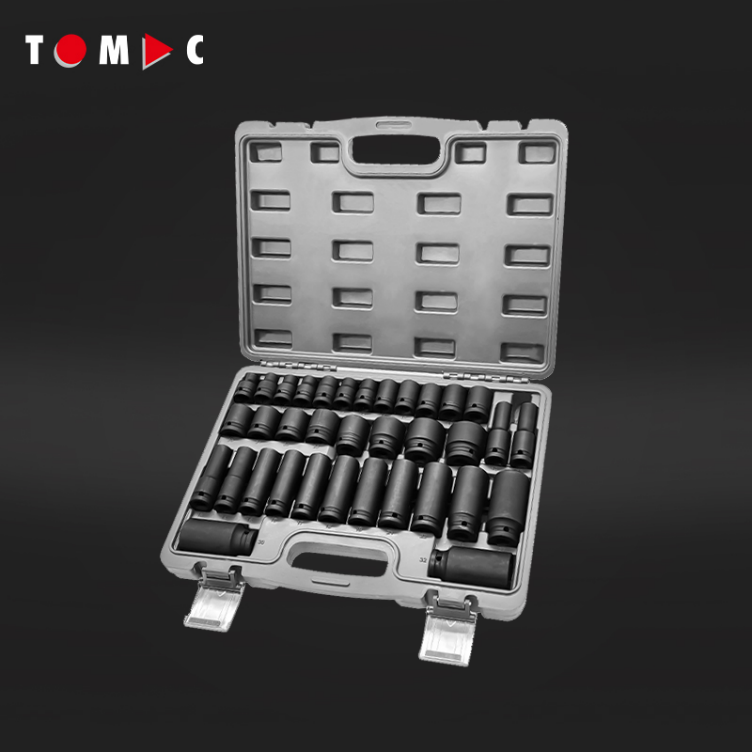
Socket Sets and Torque Wrenches by Drive Size (¼", ¾", ½") for Critical Fastener Integrity
Mismatched torque application causes 23% of wheel detachment incidents, per the NTSB’s 2023 analysis. A calibrated ½" drive torque wrench ensures proper lug nut tension, while ¼" drive sockets access electronics bay fasteners. For driveline work:
- ¾" drive sets handle fuel injector bolts (15–30 ft-lbs)
-
Deep-well impact sockets remove corrosion-resistant axle nuts
Technicians verify torque wrench calibration quarterly to maintain fastener reliability in high-vibration environments.
Power Tools That Deliver Speed Without Sacrificing Safety
Impact Wrenches and Air Ratchets: Optimizing Bolt Removal in Tight Spaces
The best professional impact wrenches can deliver around 2000 ft-lbs of torque according to HeavyTech Review from last year, which makes them really good at getting stuck lug nuts and frame bolts off quickly without wearing out whoever's using them. When working inside those cramped engine bays where there's barely enough space to swing a regular tool, angled air ratchets become indispensable. They work great when clearance drops below 30 degrees because of their compact design. Most modern models come equipped with safety clutch mechanisms that actually stop sudden kickbacks, something every mechanic knows can cause serious injury when dealing with high torque situations. Compact pneumatic ratchets are especially handy for jobs like fixing brake chambers or working on exhaust systems where space is at a premium. These tools keep bolts intact even under tough conditions thanks to their precise directional control, so nobody has to deal with stripped threads or rounded corners after trying to force things apart.
Electric vs. Pneumatic Tradeoffs: Portability, CFM, and Duty Cycle for On-Site Repairs
| Factor | Electric Tools | Pneumatic Tools |
|---|---|---|
| Portability | Cordless operation (no hose limits) | Requires 90+ PSI air compressor |
| CFM Demand | Not applicable | 4–20 CFM depending on tool size |
| Duty Cycle | 30–45 mins continuous (battery) | Unlimited with adequate air supply |
| Weight | 18–35% heavier (battery burden) | Lighter motor construction |
The latest lithium ion cordless impact wrenches can hit around 450 foot pounds of torque, which gets rid of those annoying hose trip hazards so important during roadside repairs when there's no access to compressed air. But most fleet techs who spend their whole day on the job still go for pneumatic tools when they need consistent power over long periods, especially for big jobs such as rebuilding axles. Tool companies are catching onto this demand too. Many top brands now build thermal sensors right into their electric models. These sensors kick in and cut back power just before things get too hot, helping workers maintain good speed without compromising on safety standards that keep everyone protected from accidents.
Lifting, Support, and OSHA-Compliant Safety Equipment
Getting the right lifting gear and following proper safety procedures can stop major accidents when working on heavy duty trucks. The Occupational Safety and Health Administration has pretty strict rules about things like hoists, slings, and those jack stands we all know so well. According to regulation 29 CFR 1910.184, these tools need to be tested at 125% of their rated capacity and checked regularly because equipment just breaks down over time. Take chain slings for instance they should get looked at every single day visually, and then there are those annual inspections by certified professionals to spot any signs of metal fatigue or weird shapes forming in the links. And don't forget about the basic safety stuff workers wear while doing this kind of work.
- Hydraulic bottle jacks (20+ ton capacity) for axle lifting
- Adjustable jack stands with locking pins for secure support
- ANSI-approved harnesses with shock-absorbing lanyards
- Spill containment pads for fluid management
Keeping track of maintenance records and having visible load limits marked clearly around the shop isn't just good practice it's basically required for anyone concerned about workplace safety according to OSHA guidelines on lifting equipment. Shops that followed OSHA standards for their lifting programs saw something pretty impressive back in 2024 actually had 68 fewer suspension related accidents compared to places where nobody bothered checking those boxes. When techs work on things like car frames or pulling engines out from underneath vehicles, proper documentation and clear markings really help prevent serious injuries from happening. Most experienced mechanics know this firsthand after seeing what can go wrong when someone tries to lift beyond what the equipment was designed for.
Specialty Truck Tools for Axle, Brake, and Driveline Systems
Brake Spring Tools, Bearing Pullers, and Heavy-Duty Oil Filter Wrenches
When working on heavy duty trucks, having the right tools isn't just nice to have it's absolutely essential for getting into those tricky spots like axle assemblies, brake systems, and drivelines. Take brake spring tools for instance they're lifesavers in the shop because they handle those super tight springs safely when replacing pads or shoes. We're talking about forces well over 1500 psi here, so safety first! For bearing work, specialized pullers make all the difference. They protect the driveline from damage during removal which means parts last longer and saves shops around 30% on replacement costs compared to trying to jury rig solutions. The oil filter wrenches we see in serious shops have those reinforced grips and teeth that really bite into filters even under 250 plus foot pounds of torque. These tools hold up in tight engine compartments where leaks just won't do. Standard car tools simply can't cut it in truck shops. Truck specific tools are built to survive salt air corrosion and get used straight through 12 hour shifts day after day. That kind of durability keeps commercial fleets passing their DOT inspections without surprises.
Diagnostic Truck Tools for Modern Electronics and Emissions Systems
Modern heavy-duty trucks rely on sophisticated electronics and emissions controls. Technicians need specialized diagnostic truck tools to maintain compliance and performance. These instruments detect faults in complex 12V/24V hybrid systems and emissions components.
Multimeters and Test Kits for 12V/24V Hybrid Circuits and Ground-Fault Detection
Digital multimeters measure voltage, resistance, and current in dual-voltage systems and identify ground faults—a leading cause of electrical failures in commercial vehicles. Key applications include:
- Testing alternator output under load (14.4V ± 0.2 for 12V systems)
- Verifying sensor calibration in exhaust aftertreatment systems
- Diagnosing parasitic draws exceeding 50mA that drain batteries
Insulation testers complement multimeters by detecting compromised wiring insulation before short circuits occur.
J1939-Compatible Scanners (e.g., Ancel X7HD): DPF Regeneration, Injector Coding, and Fault Tracing
SAE J1939 protocol scanners interface directly with engine control units for emissions management. A leading scanner performs three critical functions:
- DPF regeneration: Forces soot combustion at 600°C to prevent filter blockage
- Injector coding: Synchronizes replacement injectors with fuel trim parameters
-
Fault tracing: Decodes manufacturer-specific codes across CAN bus networks
These tools reduce diagnostic time by 70% compared to manual methods (Heavy Duty Trucking 2023).
| Diagnostic Function | Impact | Compliance Relevance |
|---|---|---|
| Live Data Monitoring | Real-time sensor verification | EPA emissions standards |
| Forced Regeneration | Prevents derate events | CARB opacity requirements |
| Component Activation | Solenoid/actuator testing | FMCSA roadside inspection |
FAQs
Why are industrial-grade hand tools preferred for heavy-duty technicians?
Industrial-grade hand tools are preferred because they prevent costly errors and ensure OSHA-compliant repairs, providing precision where power tools cannot reach.
What are some key benefits of using pneumatic tools over electric tools?
Pneumatic tools are favored for consistent power delivery over long periods, particularly for extensive jobs like axle rebuilding. They are lighter and, with a sufficient air supply, offer an unlimited duty cycle.
How does OSHA ensure safety with lifting and support equipment?
OSHA regulations require regular maintenance and testing of tools at 125% of their rated capacity, along with clear certifications and markings, to prevent workplace accidents.
What purpose do J1939-compatible scanners serve in truck diagnostics?
J1939-compatible scanners allow technicians to manage emissions by performing DPF regeneration, injector coding, and fault tracing efficiently, optimizing the diagnostic process.