
 EN
EN
 AR
AR
 NL
NL
 FR
FR
 DE
DE
 IT
IT
 NO
NO
 PL
PL
 PT
PT
 RU
RU
 ES
ES
 SV
SV
 IW
IW
 GA
GA
 MI
MI
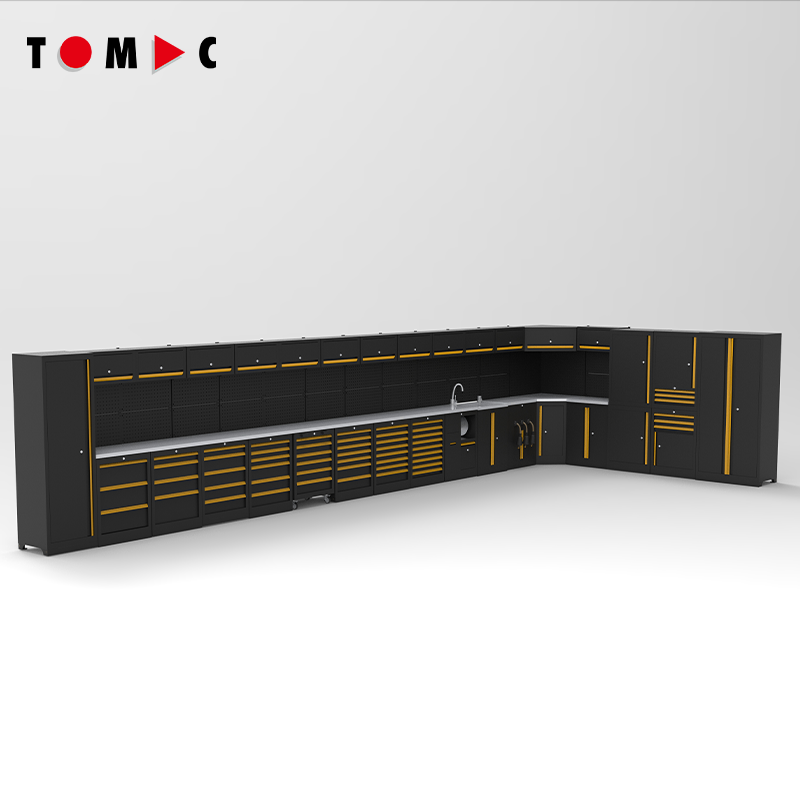
Why Scalability Is the Core Requirement in Any Garage Storage Solution
The Pitfall of Static Systems: How Workshop Growth Exposes One-Size-Fits-All Limitations
When workshops need to add new tools or change their layout around, fixed shelving and those stiff cabinets just get in the way fast. According to Workspace Utilization Report from last year, most workshops actually grow about 40% bigger within three years. But these old school storage systems don't adapt well at all. Instead of making small changes here and there, businesses end up replacing whole sections which eats into both their physical space and cash reserves. The problem gets worse as inventory piles up over time. People are spending roughly seven hundred forty bucks each year on unnecessary reorganizing efforts according to Ponemon's findings back in 2023. Modular storage options completely sidestep all these headaches though. They allow for easy expansion without tearing everything apart every time something changes.
Modular Garage Storage Solution Options: From Entry-Level to Commercial-Grade
Scalable systems adapt fluidly to evolving workshop demands through customizable components. Consider these tiers:
| System Tier | Key Features | Ideal For |
|---|---|---|
| Entry-Level | Adjustable wire frames, plastic bins | Light-duty tools, seasonal items |
| Mid-Range | Steel rails, slide-out work surfaces | Power tools, workshop expansion |
| Commercial-Grade | Reinforced joints, 500-lb+ per bay capacity | Industrial equipment, frequent reconfiguration |
Entry versions offer affordable reorganization via vertical panels and stacking bins, while heavy-duty steel frameworks support professional-grade machinery. The core advantage? Start compact and add components only as needs arise—no overbuying, no obsolescence.
Maximizing Floor Space with Vertical and Overhead Garage Storage Solutions
Wall-Mounted Systems Compared: Slatwall vs. Pegboard vs. Track—Load Capacity, Tool Adaptability, and Long-Term Durability
Vertical storage transforms unused wall space into functional organization zones. Three primary options dominate the market:
- Slatwall panels, made from moisture-resistant PVC, support up to 75 lbs per linear foot (Home Storage Institute 2024) and accept specialized hooks for ladders and large tools.
- Pegboard, prized for instant tool reconfiguration, is limited by its particleboard core to 30 lbs per square foot—and prone to warping in damp environments.
- Steel track systems, engineered for industrial use, handle 100+ lbs per bracket and allow horizontal or vertical accessory mounting, though they require professional installation due to structural anchoring requirements.
| System | Max Load Capacity | Key Advantage | Climate Consideration |
|---|---|---|---|
| Slatwall | 75 lbs/ft | Customizable heavy-duty hooks | Humidity-resistant |
| Pegboard | 30 lbs/sf | Instant tool reconfiguration | Warps in damp environments |
| Track | 100+ lbs/bracket | Multi-directional accessories | Corrosion-resistant coating |
Overhead Garage Storage Solution Safety & Practicality: Weight Limits, Ceiling Types, and Real-World Installation Considerations
Ceiling-mounted systems reclaim critical square footage—but demand rigorous planning. Standard weight limits range from 250–600 lbs, varying by joist spacing and material; steel-framed ceilings support 35% heavier loads than wood (Structural Safety Bureau 2024). Critical installation factors include:
- Clearance height: Maintain at least 18" below garage door mechanisms
- Joist anchoring: 80% of DIY failures stem from improper beam mounting
- Accessibility: Retractable pulleys or motorized lifts significantly improve retrieval efficiency
Always consult structural diagrams before installation—70% of homes require joist reinforcement for overhead units exceeding 300 lbs.
Designing an Integrated Garage Storage Solution Strategy by Workshop Size
Small Workshop Priorities: Wall + Overhead Focus to Preserve Workflow Space
For small workshops measuring less than 200 square feet, making good use of vertical space becomes essential. Mounting solutions such as slatwall panels and strong pegboards help store lots of stuff without taking up precious floor area something that matters a lot since studies show around three quarters of hobbyists face problems with their workflow because of messy spaces according to Workspace Efficiency Journal from last year. When it comes to overhead storage, think about putting seasonal gear and big supply boxes there but make sure these racks are properly attached to ceiling joists capable of holding at least 250 pounds weight limit. Keep those tools that get used all the time close enough so they don't need much reaching during projects, leaving floors clear mainly for things that move around and whatever's currently being worked on. Getting adjustable hooks and pull out containers makes sense too since this kind of setup can grow with changing needs over time without having to completely rearrange everything every few months.
Large Workshop Priorities: Zoned Floor + Vertical + Overhead Integration for Tool Accessibility and Process Flow
When workshops go over 400 square feet, good zoning becomes absolutely necessary. Floor level cabinets help establish specific areas for different tasks like woodworking, car repairs, or putting things together, each area needing its own kind of storage solutions. Getting industrial quality mobile carts really makes a difference too. According to the Workshop Efficiency Journal from last year, these carts can save around 30% on time spent finding tools, which helps move around between stations much faster. For vertical storage options, think about installing track walls close to where people actually need the big power tools, plus overhead racks positioned above workbenches for storing bulk materials. Putting everything together creates this efficient loop through the space. Sanding stuff should be right next to where someone sits to work on projects, finishes materials placed where air flows properly, and safety equipment accessible at every entry point into different sections. This setup keeps traffic flowing smoothly even when dealing with all sorts of specialty items needed for various jobs.
FAQ
Why is scalability crucial for garage storage solutions?
Scalability is crucial as it allows the storage system to adapt to the changing needs of a workshop, accommodating growth without requiring extensive and costly changes.
What are the primary types of modular garage storage systems available?
Modular storage systems come in three main tiers: entry-level with adjustable wire frames and plastic bins, mid-range with steel rails and slide-out surfaces, and commercial-grade with reinforced joints for industrial equipment.
How do wall-mounted storage systems differ among slatwall, pegboard, and track systems?
Slatwall panels support heavy loads and are humidity-resistant, pegboards allow for instant reconfiguration but are prone to warping, and track systems offer multi-directional accessories but need professional installation.
What should be considered when installing overhead garage storage solutions?
Consider weight limits, clearance height, proper joist anchoring, and accessibility features like retractable pulleys to ensure safe and efficient use of overhead storage.
How can small and large workshops optimize their storage solutions?
Small workshops should focus on vertical and overhead storage to preserve floor space, while large workshops benefit from integrated zoned floor, vertical, and overhead storage for tool accessibility and process flow.
Table of Contents
- Why Scalability Is the Core Requirement in Any Garage Storage Solution
- Maximizing Floor Space with Vertical and Overhead Garage Storage Solutions
- Designing an Integrated Garage Storage Solution Strategy by Workshop Size
-
FAQ
- Why is scalability crucial for garage storage solutions?
- What are the primary types of modular garage storage systems available?
- How do wall-mounted storage systems differ among slatwall, pegboard, and track systems?
- What should be considered when installing overhead garage storage solutions?
- How can small and large workshops optimize their storage solutions?