
 EN
EN
 AR
AR
 NL
NL
 FR
FR
 DE
DE
 IT
IT
 NO
NO
 PL
PL
 PT
PT
 RU
RU
 ES
ES
 SV
SV
 IW
IW
 GA
GA
 MI
MI
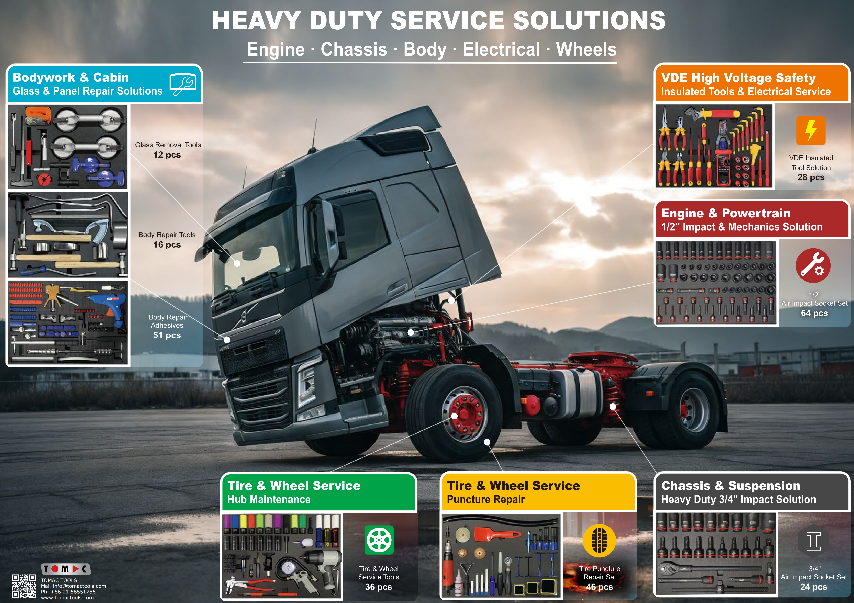
Core Hand and Torque Tools for Reliable, Compliant Repairs
Wrenches, Sockets, and Ratchets: Durable Sets Built for Heavy-Duty Truck Applications
Truck tools need to hold up under serious punishment. Wrenches made from chrome vanadium steel last longer when dealing with those tough torque situations, and impact rated sockets just don't crack under pressure like cheaper alternatives. Sealed ratchets stay functional even after months of exposure to grease and workshop grime. Mechanics love deep offset wrenches because they fit into tight spaces around frame mounts and suspension components where standard tools simply won't reach. Flank drive designs make all the difference too since they stop bolts from getting rounded off during removal. According to field reports from maintenance shops across the country, using correctly sized tools cuts down on damaged parts by roughly 40% when working on brakes or drivetrains. Fleet operators know this well enough to stock up on comprehensive SAE and metric tool sets. Having everything in one place saves hours of waiting for specialty tools when multiple truck models need attention at once.
Torque Wrenches: Ensuring Fleet Safety and Regulatory Compliance Through Proper Calibration
Getting the right amount of torque applied makes all the difference when it comes to preventing serious problems in wheel assemblies and other important parts. Digital torque wrenches that hit within 1% accuracy help maintain proper tightness across fasteners, and keeping good records of calibrations keeps those DOT inspectors happy. According to NHTSA data from last year, around one third of wheel separation incidents happen because someone didn't tighten those lug nuts enough, and that kind of mistake typically leads to accidents costing roughly seven hundred forty thousand dollars each time. Some basic maintenance habits matter a lot here. Store torque wrenches at their minimum setting so the springs stay intact over time. Get them calibrated once a year according to ISO 6789 specs, and don't forget to measure angles for bolts where stretching matters most. When tools are properly set up, technicians avoid two major issues: components coming loose while driving, and damaged studs from applying too much force.
Diagnostic Truck Tools for Modern Electronic Systems
Commercial-Grade Scanners for ABS, Brake Controllers, and Lighting Modules
Today's big rigs are packed with all sorts of connected electronics. The anti-lock brakes, brake control units, and various lights talk to each other through something called a CAN bus network. Techs use standard diagnostic tools that can read those special error codes hidden in these systems. With them, they can spot problems such as mismatched wheel speed sensors or blown fuses in trailer lighting circuits. These diagnostic gadgets cut down on fixing time quite a bit actually maybe around half what it used to take when mechanics had to check everything manually. They show real time data and walk techs through testing components step by step. And let's not forget compliance issues either. Any decent scanner needs to handle J1939 standards plus whatever specific software manufacturers require. Otherwise how else would shops pass those mandatory annual inspections for emissions and safety requirements?
Multimeters, TPMS Tools, and Voltage Testers for Electrical System Validation
Most electrical problems that pop up in commercial vehicles usually come down to things like voltage drops, bad grounding points, or issues with the CAN bus system communication. These kinds of problems are pretty much impossible to spot without getting out some serious diagnostic equipment. When checking circuits, multimeters are essential for verifying if everything is working right. They measure how much resistance there is in the system (should be under 0.5 ohms for really important grounding points) and also check whether voltages stay stable within about plus or minus 0.5 volts. For tires that get rotated around, TPMS tools help reset those sensor identification codes so they continue functioning properly. And let's not forget about non-contact voltage testers which can track down those sneaky battery drains caused by parasitic loads. Putting all these tools together helps technicians avoid making mistakes when diagnosing tricky issues such as random ECU restarts or unexpected ABS warnings. Plus, this approach aligns well with what the FMCSA expects regarding vehicle electrical safety requirements across the industry.
Pneumatic and Fluid Service Tools That Accelerate Fleet Turnaround
Impact Wrenches and Air Ratchets: Matching PSI, CFM, and Duty Cycle to Shop Workloads
When picking out pneumatic tools, it really comes down to matching what the specs say with what actually needs doing on the job. For impact wrenches, they should be able to handle around 500 to 1,200 foot pounds of torque when dealing with those stubborn lug nuts or suspension parts. Air ratchets work best at about 60 to 90 pounds per square inch, especially useful in tight spots where space is limited. There are several important factors to think about here. First up is CFM, or cubic feet per minute. Shops that run nonstop usually need about 4 to 5 CFM at 90 psi for each tool so there aren't any annoying pressure drops mid-job. Then there's the duty rating thing. Places running 24/7 absolutely need industrial strength tools rated for 100% duty cycle operation. Don't forget about comfort either. Tools with vibration reducing handles make all the difference for technicians working full days without their hands turning numb from constant use. And let's face it, using underpowered gear just slows everything down. We're talking about bolt removal times going up roughly 40%, which means fewer cars get through the service bays each day.
Fluid Extractors, Brake Bleeders, and Coolant Flush Systems for Precision Maintenance
Fluid service tools today cut down on those tedious manual jobs that used to take over 45 minutes per car. Take oil extractors for instance these have those dual stage pumps that suck out around 95 percent of all the gunk right through the dipstick tube so no need to crawl underneath the vehicle anymore. Coolant exchange systems are pretty amazing too they swap out old antifreeze for fresh stuff and get rid of those pesky air pockets within just 15 minutes flat. This matters a lot because modern aluminum engines tend to overheat when there's air stuck inside them. Brake bleeder kits equipped with pressure regulators make sure there are absolutely no bubbles left in the brake lines which stops customers from coming back complaining about spongy pedals something that happens in about 22 out of every 100 repair cases according to mechanics I've talked to. Overall these tools slash labor time for fluid services by roughly half plus they keep dangerous waste contained helping shops stay compliant with EPA regulations while also boosting their bottom line significantly.
Preventive Maintenance Truck Tools for Data-Driven Longevity
Fleet managers are increasingly turning to predictive maintenance software that turns all that messy operational data into actual fixes before breakdowns happen. These systems basically rely on telematics boxes and various IoT sensors stuck all over vehicles to keep tabs on things like how hot engines get, what kind of oil is flowing through them, battery health levels, and when brakes start wearing down. When mechanics look at current performance numbers next to what's normal for similar vehicles, they get warnings about problems developing so they can swap out parts during regular maintenance visits instead of dealing with broken-down trucks on highways somewhere. This approach stops people from replacing stuff too early just because it looks old, but still makes sure everything lasts as long as possible. According to some recent studies from 2023, companies using this tech save between 17% and 23% on diagnostic work and stretch out drivetrain life by around 40k miles compared to old fashioned fixing things only when they break. While there are upfront costs involved, most operators find that keeping their rolling stock running smoothly pays off handsomely in reduced downtime and better bottom line results over time.
FAQ
What are the benefits of using chrome vanadium steel wrenches?
Chrome vanadium steel wrenches are durable and can withstand tough torque situations, ensuring they last longer in heavy-duty applications.
Why is proper torque calibration important?
Proper torque calibration prevents wheel assembly problems, reduces accidents, and ensures compliance with safety regulations.
What role do diagnostic tools play in modern trucks?
Diagnostic tools help identify and fix electronic system issues quickly, ensuring the vehicle meets emission and safety standards.
Why are pneumatic tool specifications important?
Matching tool specifications to job requirements prevents pressure drops and ensures efficient operation, improving productivity.
How do predictive maintenance systems benefit fleet operators?
Predictive maintenance systems identify potential issues before they cause breakdowns, reducing downtime and maintenance costs.