
 EN
EN
 AR
AR
 NL
NL
 FR
FR
 DE
DE
 IT
IT
 NO
NO
 PL
PL
 PT
PT
 RU
RU
 ES
ES
 SV
SV
 IW
IW
 GA
GA
 MI
MI
Diagnosing Performance Problems
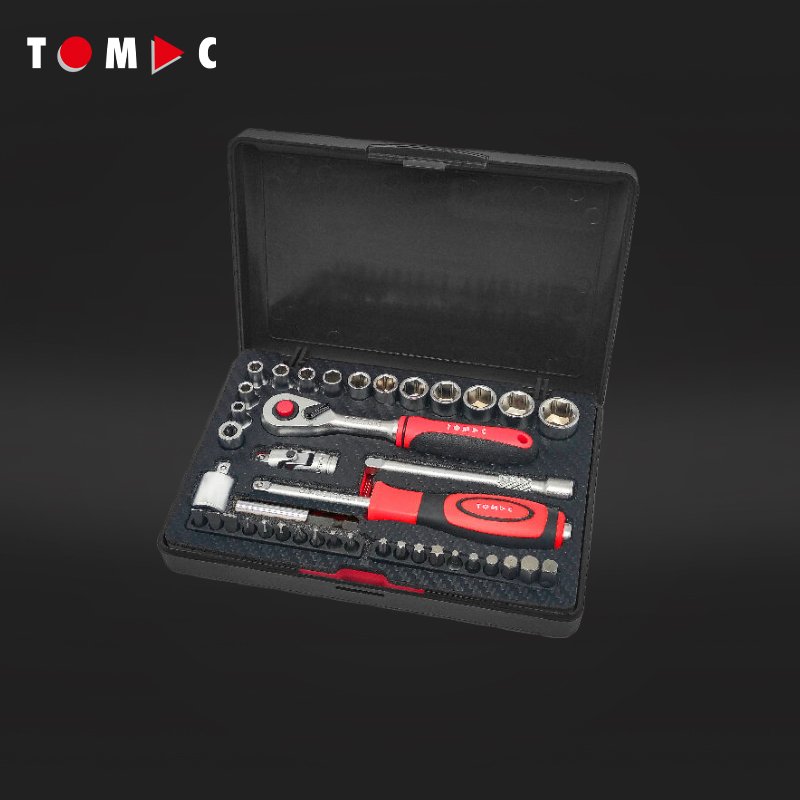
A 1/4" drive socket wrench set experiences failure modes distinct from larger drives because the smaller drive square concentrates stress on a reduced cross-section. Understanding whether the problem originates from the socket, ratchet mechanism, or application technique determines the solution.
The most frequently misdiagnosed issue is socket slippage. Technicians attribute this to socket wear when the root cause is using a 12-point socket on a 6-point fastener already beginning to round from previous improper tool contact. Twelve-point designs contact near fastener corners where rounding concentrates, while 6-point contacts the stronger flat surfaces. Switching to 6-point sockets for damaged fasteners often solves the problem without tool replacement.
A motorcycle service center in Osaka tracked socket-related warranty rework and identified that 12-point sockets accounted for 73% of rounded-fastener incidents despite representing 40% of usage. Switching commonly used sizes to 6-point eliminated rounded-fastener rework from subsequent quarterly data.
Socket-Related Issues
Slippage and Fastener Rounding
Socket-to-fastener fit degrades through broach wear inside the socket and fastener head deformation. Broach wear appears as an enlarged hex opening with polished contact surfaces. A worn socket applies force to corners rather than flats — the rounding mechanism.
Prevention requires monthly inspection of high-usage sizes under magnification. Replacement at first visible deformation prevents the cascading problem where a worn socket damages fasteners, which then wear subsequent sockets faster. The cost of replacing a socket is negligible compared to extracting a rounded fastener from an engine block.
Socket Wall Cracking
Thin-wall sockets sacrifice material for dimensional compactness. When a technician applies breaker-bar leverage to a thin-wall socket — or uses it on an impact driver — hoop stress exceeds material tensile strength, splitting the socket longitudinally. Restrict thin-wall sockets to hand ratchet use only with torque limited to approximately 15 Nm.
Retaining Ball and Detent Wear
The spring-loaded ball bearing in the ratchet drive square retains sockets during use. When this ball wears flat or the spring fatigues, sockets release during the return stroke — dropping into engine bays or rolling under workbenches. Replacement balls and springs available as service parts restore retention for approximately 10% of a new ratchet's cost.
Ratchet Mechanism Issues
Skip-and-Slip Behavior
The pawl engages gear teeth to transmit rotation. As teeth wear, the pawl slips over worn profiles rather than engaging positively — the characteristic skip-and-slip where the handle rotates without turning the socket. A rebuild kit containing a replacement gear, pawl, and spring restores function in about 10 minutes. Continued skipping after rebuild indicates gear housing wear requiring replacement.
Direction Selector Failure
Dirt, dried grease, and metal particles accumulate in the selector mechanism, causing it to stick between positions or fail to engage cleanly. Disassembly, solvent cleaning, and re-lubrication with light machine oil — not heavy grease, which attracts contaminants — restores function in most cases.
Extension and Adaptor Issues
Wobble Extension Wear
Wobble extensions provide 5–10 degrees of articulation through relieved drive square design. The relief cut removes material, concentrating stress on the remaining cross-section and making wobble extensions the most common failure point in 1/4" accessory systems. Visible deformation at the drive square requires immediate replacement. Reserve wobble extensions for access-constrained applications only.
Universal Joint Binding
Universal joints enable up to 30 degrees of articulation but introduce friction proportional to angle. When the joint accumulates dirt and loses lubrication, friction increases, reducing torque transmission. Joints can seize at high angles where internal components bind. Replacement is the standard remedy for binding joints.
Frequently Asked Questions
Why does a 1/4" socket slip on fasteners that a 3/8" socket grips?
The smaller drive transmits lower torque, so the technician pulls harder — often exceeding design torque. The socket then cams out, particularly with 12-point designs on damaged hex heads. Switching to 6-point sockets for affected sizes typically resolves the issue. Shanghai Tomac Tools provides both 6-point and 12-point options.
How can a workshop identify worn sockets before they damage fasteners?
Monthly visual inspection of high-use sizes under good lighting. A new socket of the same size placed alongside provides reference — differences in hex opening shape are apparent. Replace any socket showing visible broach deformation rather than waiting for it to round a fastener.
What causes the ball detent to stop holding sockets?
Spring fatigue from compression cycles and ball flat-spotting from repeated insertion and removal. The retaining ball mechanism is a wear item designed for field replacement. Rebuild kits restore retention at a fraction of new ratchet cost.
Should 1/4" drive wobble extensions be used for all applications?
No. Wobble extensions sacrifice material at the relief cut, limiting torque capacity and fatigue life. Reserve for access-constrained applications. Use straight extensions for all other work to preserve tool life and torque accuracy.
How does 6-point vs. 12-point socket selection affect troubleshooting?
Six-point sockets contact fasteners on flats, distributing force across larger area and avoiding corner contact. Twelve-point sockets engage with finer indexing but contact near corners where damaged fasteners are weakest. Switching to 6-point for stubborn fasteners is the first troubleshooting response.
What is the most overlooked maintenance for 1/4" drive ratchets?
Lubrication. Factory grease dries, mixes with wear particles, and becomes abrasive paste accelerating gear and pawl wear. Annual disassembly, solvent cleaning, and re-lubrication with light machine oil prevents the abrasive wear causing skip-and-slip failure. This ten-minute procedure costs essentially nothing.