
 EN
EN
 AR
AR
 NL
NL
 FR
FR
 DE
DE
 IT
IT
 NO
NO
 PL
PL
 PT
PT
 RU
RU
 ES
ES
 SV
SV
 IW
IW
 GA
GA
 MI
MI
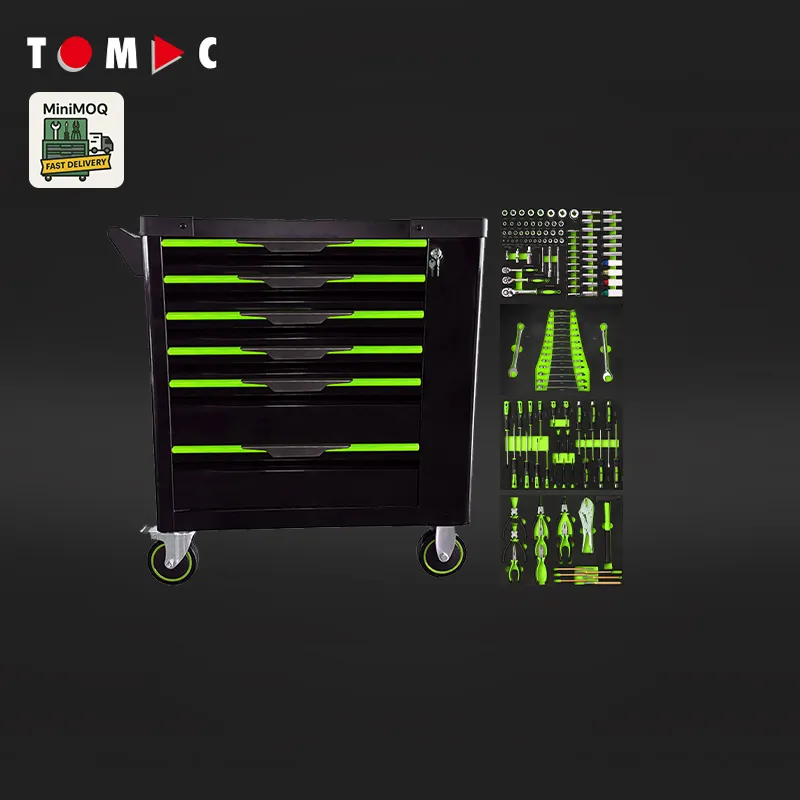
Innovative Design Features in Modern Tool Cabinets
Durable Steel Construction for Heavy-Duty Load Capacity
Modern tool cabinets use 14- to 18-gauge steel frames, supporting up to 2,500 lbs per shelf. Powder-coated finishes enhance corrosion resistance, while reinforced joints prevent deformation. Industry reports indicate that 85% of professionals prioritize heavy-duty steel construction for its unmatched load capacity in industrial settings.
Customizable Drawer Configurations for Specialized Tools
Adjustable dividers and removable partitions accommodate torque wrenches, micrometers, and power tools up to 22" long. Spring-assisted slides support 150 lbs loads, reducing tool retrieval time by 40% in busy workshops.
Ergonomic Handle Designs for Smooth Operation
Contoured aluminum handles with non-slip grips reduce hand fatigue, while low-profile designs prevent snagging. Angled drawer fronts improve visibility by 30% compared to traditional layouts.
Space Optimization Strategies for Tool Cabinets
Vertical Storage Solutions Using Pegboard Integration
Pegboard panels support hooks, shelves, and magnetic strips, enabling 50–70% more tool storage than drawer-only systems. This approach reduces clutter while keeping small-to-medium tools within reach, a critical factor for productivity.
Modular Drawer Systems for Compact Workshops
Interchangeable compartments adapt to evolving tool inventories:
- Telescoping slides supporting 150–250 lbs
- Removable dividers for irregular tools
- Half-width drawers to eliminate wasted space
These features make modular systems ideal for auto repair shops and shared workspaces.
Magnetic Tool Holders for Instant Accessibility
Neodymium magnetic strips (8–12 lb pull force) allow instant placement of metal tools, reducing retrieval time by 18%. They also minimize drawer wear, extending cabinet lifespan in heavy-use environments.
Security Enhancements in Tool Cabinet Systems
Heavy-Duty Locking Mechanisms for Valuable Equipment
Hardened steel locks with multipoint latching resist prying attempts. Over 80% of workshops use ANSI/BHMA-certified systems, which endure 150,000+ cycles. Dual authentication via keys and combination dials adds extra protection.
Smart Lock Technology Integration Trends
Biometric scanners and IoT-enabled keypads provide real-time intrusion alerts. Features like temporary access codes and AES-256 encryption reduce unauthorized entry attempts by 61% compared to traditional locks.
Modular Tool Cabinet Systems for Flexible Expansion
Expandable Cabinet Units for Growing Collections
Stackable and interlocking modules allow vertical or horizontal expansion, adapting to tool inventories that grow 18-34% annually. This phased approach prevents overcrowding in automotive and aerospace workshops.
Interchangeable Component Wall-Mounted Options
Rail-mounted panels enable quick reconfiguration without hardware—ideal for mobile repair trucks or rental spaces. Users can convert 60% of wall space into adjustable storage zones.
Color-Coded Modular Storage Solutions
Visual coding speeds tool retrieval:
- Red: Emergency/SAE tools
- Blue: Metric instruments
-
Yellow: Electrical equipment
This system reduces search time by 40% and prevents cross-contamination.
Workflow Efficiency Through Cabinet Organization
Laser-Cut Foam Inserts for Precision Tool Placement
Custom foam cavities reduce tool damage and replacement costs by 18%. Shadow outlines provide instant visual verification of missing items.
Labeling Systems for Multi-Category Workshops
Color-coded labels and QR codes help locate tools 40% faster. They also reduce cross-contamination between specialties like electrical and automotive work by 27%.
Frequency-Based Tool Compartmentalization
Daily-use tools in waist-level drawers reduce bending by 62%. This tiered system improves task completion rates by 14% over alphabetical storage.
Selecting Optimal Tool Cabinets for Specific Needs
Workshop Size vs. Cabinet Footprint Analysis
For small spaces under 100 sq. ft., consider vertical 18"-24" deep cabinets with casters. High-use tools belong in central 36"-44" high drawers for easy access.
Weight Capacity Requirements by Tool Type
| Tool Category | Avg. Weight | Recommended Capacity |
|---|---|---|
| Power Tools | 85-120 lbs | 150 lbs/shelf |
| Hand Tools | 30-50 lbs | 75 lbs/drawer |
| Automotive | 200-400 lbs | 500 lbs/compartment |
Industrial-grade cabinets should pass 2,000 lb static load tests.
Budget Considerations for Professional vs DIY Use
Professional-grade cabinets ($1,200-$4,000) offer triple-walled steel and 100,000+ cycle durability. They retain 92% residual value after 18 months, making them a cost-effective choice for daily use.
FAQs
What are the benefits of using steel construction in tool cabinets?
Steel construction in tool cabinets provides unmatched load capacity, corrosion resistance, and prevents deformation, making it ideal for industrial settings.
How do modular drawer systems improve space optimization?
Modular drawer systems adapt to evolving tool inventories with features like interchangeable compartments and telescoping slides, making them suitable for compact workshops.
What is the advantage of using smart lock technology in tool cabinets?
Smart lock technology provides enhanced security with features like biometric scanners, IoT-enabled keypads, and AES-256 encryption, reducing unauthorized entry attempts.
Table of Contents
- Innovative Design Features in Modern Tool Cabinets
- Space Optimization Strategies for Tool Cabinets
- Security Enhancements in Tool Cabinet Systems
- Modular Tool Cabinet Systems for Flexible Expansion
- Workflow Efficiency Through Cabinet Organization
- Selecting Optimal Tool Cabinets for Specific Needs
- FAQs