
 EN
EN
 AR
AR
 NL
NL
 FR
FR
 DE
DE
 IT
IT
 NO
NO
 PL
PL
 PT
PT
 RU
RU
 ES
ES
 SV
SV
 IW
IW
 GA
GA
 MI
MI
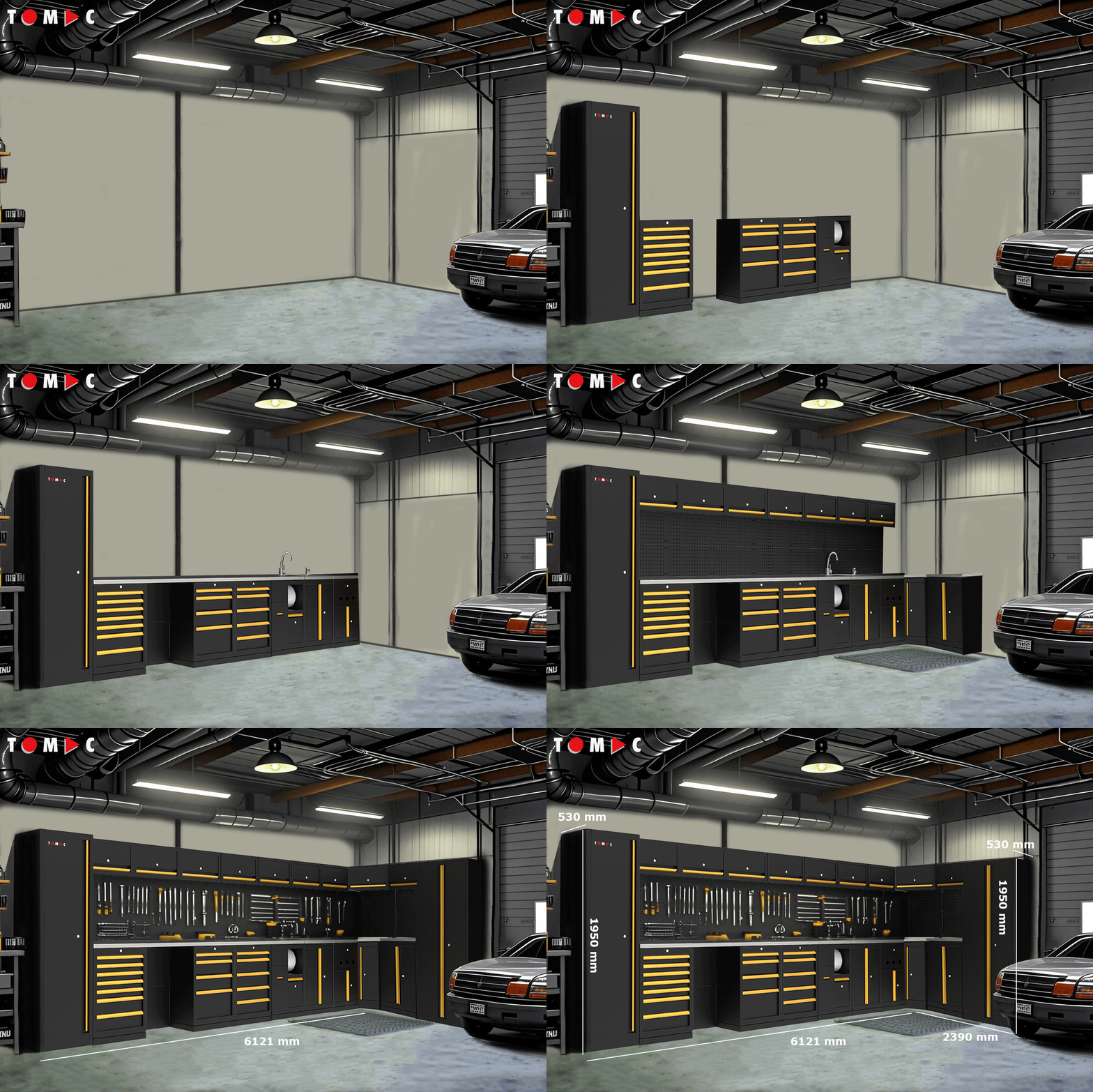
Start with Strategic Decluttering: The Essential First Step for Any Garage Storage Solution
A clutter-free foundation is non-negotiable for effective garage storage. Begin by emptying the space completely—this reveals hidden damage, uncovers lost floor space, and establishes your true square footage. The 2025 Garage Organization Survey found 78% of homeowners underestimated their storage needs until decluttering exposed actual requirements.
The Keep/Donate/Sell/Trash Framework—Applied Specifically to Garage Items
Implement a four-category sorting system tailored to garage contents:
- Keep: Items used within 12 months (e.g., functional tools, seasonal tires)
- Donate: Unused sports equipment or duplicate items in good condition
- Sell: High-value items like power tools or collectibles via local marketplaces
- Trash: Broken equipment, dried paint cans, or expired chemicals
Group similar items during sorting—automotive supplies, gardening tools, sports gear—to inform later zoning. Be ruthless: if you haven’t used specialty tools in two years, they likely belong in donate/sell piles. This process typically eliminates 30–40% of garage contents.
How Decluttering Unlocks Vertical Potential and Reveals True Storage Needs
Clearing floor clutter exposes critical vertical real estate—walls and ceilings become viable storage surfaces. Measure newly visible wall space to determine feasible slatwall or pegboard installations. Simultaneously, catalog your "keep" items by dimensions and weight:
- Bulky seasonal items → Overhead rack candidates
- Small hardware → Wall-mounted bin systems
- Long-handled tools → Vertical panel hooks
This inventory prevents overbuying storage components. For example, knowing you have 15 power tools dictates modular wall-panel requirements—not guesswork. Decluttering also identifies workflow bottlenecks—like narrow pathways between zones—that impact future layout planning.
Design a Functional Zoned Layout: Optimizing Garage Space for Vehicles, Tools, Gear, and Seasonal Items
Balancing Dedicated Zones (Workshop, Sports, Gardening) with Vehicle Access Flow
Strategic zoning transforms chaotic garages into efficient spaces. Dedicate specific areas: position workshop zones near power sources for tools, place sports equipment racks near garage doors for quick access, and cluster gardening supplies by yard exits. Critically, maintain 36–48" clearance around vehicles—a leading safety organization notes narrow pathways cause 58% of garage tripping incidents. Ensure zones don’t obstruct vehicle doors or create “storage tunnels” requiring item removal to park cars.
Avoiding the Over-Zoning Trap: Prioritizing Flexibility and High-Use Pathways
Overcompartmentalization reduces storage adaptability. Instead of micro-zones, focus on high-frequency pathways:
- Keep the central aisle clear for dollies/carts
- Use mobile storage units for seasonal rotations
- Install fold-down workbenches that disappear when unused
A single-function garage layout wastes 23% of usable space. Modular garage storage solutions like adjustable shelving outperform fixed cabinets, accommodating evolving needs while maintaining quick access to daily-use items like bikes or recycling bins.
Leverage Vertical Space: Wall-Mounted Garage Storage Solutions for Maximum Efficiency
Comparing Slatwall, Pegboard, and Louvered Panels—Best Practices for Tool & Equipment Mounting
Slatwall systems offer unmatched versatility with horizontal grooves that support hooks, shelves, and baskets—ideal for frequently rearranged tools like wrenches or paint cans. Pegboard provides budget-friendly density for lightweight items (under 15 lbs per hook); its perforated design suits drills and hand tools but struggles with bulkier equipment. Louvered panels bridge both worlds with vertical slats accommodating heavy-duty brackets for bikes or ladders (up to 75 lbs per anchor when secured to studs). Prioritize stud anchoring for all types, and match panel depth to item protrusion—keep tools under 12" deep to maintain clear walkways.
Modular Accessories That Turn Walls into Intuitive, Adaptable Garage Storage Solutions
Transform static walls into dynamic systems with:
- Rotating mounts for extension cords and hoses
- Adjustable bin rails that resize for seasonal gear
- Pivot hooks enabling vertical-to-horizontal tool shifts
This modularity lets you convert 80% of unused wall space into accessible storage zones. Swap ski holders for garden tool cradles in minutes, or expand bin capacity as needs evolve—proving a single garage storage solution can adapt without renovations. Labeled magnetic bins and color-coded brackets further reduce search time, creating instinctive workflows where every item “lives” at point-of-use.
Unlock Overhead Capacity: Safe, Accessible Ceiling Storage Solutions for Low-Use and Seasonal Items
Overhead garage storage solutions transform unused ceiling space into secure repositories for seasonal gear and infrequently accessed items. By installing ceiling-mounted racks or pulley systems, you reclaim valuable floor area while protecting belongings like holiday decorations, camping equipment, or winter sports gear from damage. Prioritize safety by verifying your ceiling joists’ weight capacity—typically 50–100 lbs per linear foot—and always anchor racks directly to structural supports. Maintain 18–24 inches of clearance below stored items to avoid interference with garage doors or vehicles. For accessibility:
- Use clear, labeled bins for instant content identification
- Install pulley mechanisms for heavy items like kayaks
- Position ladders nearby for safe retrieval
Rotate stored items seasonally to ensure only relevant gear occupies prime real estate. This approach maximizes garage storage solution efficiency without compromising accessibility or safety.
FAQ
Q: What is the first step in organizing a garage storage solution?
A: The first step is strategic decluttering. Empty the space completely to understand your actual storage needs and establish your true square footage.
Q: How does decluttering help in garage organization?
A: Decluttering unlocks vertical potential, reveals true storage needs, and helps avoid overbuying storage components. It also identifies workflow bottlenecks like narrow pathways.
Q: What is the ideal clearance around vehicles in a garage?
A: Maintaining a clearance of 36–48 inches around vehicles is recommended to ensure safety and avoid tripping incidents.
Q: How can vertical space be effectively utilized in garage storage?
A: Vertical space can be utilized with slatwall, pegboard, and louvered panels for tool and equipment mounting. Modular accessories can further enhance storage adaptability.
Q: What should be considered when installing overhead garage storage?
A: Consider the weight capacity of your ceiling joists and anchor racks directly to structural supports while maintaining necessary clearance below stored items for safety.
Table of Contents
- Start with Strategic Decluttering: The Essential First Step for Any Garage Storage Solution
- Design a Functional Zoned Layout: Optimizing Garage Space for Vehicles, Tools, Gear, and Seasonal Items
- Leverage Vertical Space: Wall-Mounted Garage Storage Solutions for Maximum Efficiency
- Unlock Overhead Capacity: Safe, Accessible Ceiling Storage Solutions for Low-Use and Seasonal Items